

The RobOps Pivot: Why Cloud DevOps is Moving to the Factory Floor
Discover why Cloud DevOps is moving to the factory floor. We break down the RobOps toolchain, the "Gravity Tax," and the massive 2026 salary delta..

Brewed for Work | Issue #5, Mar ‘26 | Premium
Welcome to Brewed for Work, your Tuesday ritual for sharper thinking about careers, workplaces, and the shifting nature of professional life.
If you’re reading this as a free subscriber, consider upgrading to the paid tier for full access to deep-dive essays, exclusive workbooks, and interactive polls. Your subscription keeps this independent newsletter fully brewed and your career better caffeinated.
» » » Check out subscribers’ benefits.
In this issue of Brewed for Work, we explore the “RobOps Pivot”: the massive 2026 migration of Cloud DevOps engineers from virtual clusters to the physical factory floor.
As industrial automation matures, managing the “Robotic Edge” now requires a bilingual expertise in both ROS 2 and Kubernetes (K3s). We break down the “Gravity Tax” inherent in physical deployments and analyze the staggering salary delta, where the scarcity of engineers who can bridge the gap between YAML and actuators is driving compensation to $240k+ levels.
The future of systems engineering isn’t just data; it’s atoms.
Today’s Issue at a Glance:
The Gravity Tax: Why RobOps is DevOps on Hard Mode
The Modern RobOps Toolchain (ROS + Kubernetes)
The Edge Computing Frontier
The Economics of the Pivot & The Salary Delta
Bridging the Gap: How to Transition
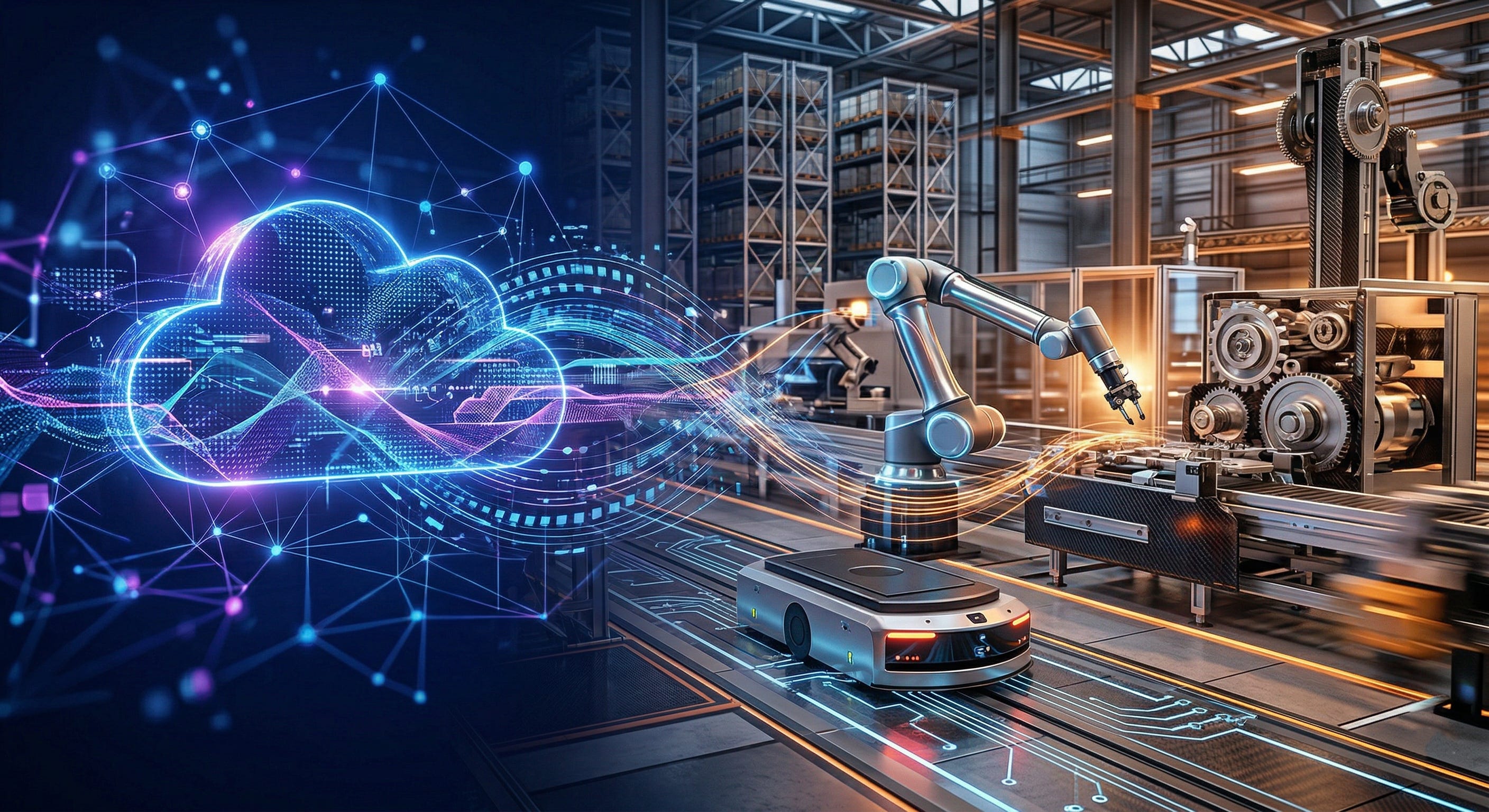
For the past decade, the DevOps narrative was written in the pristine, temperature-controlled aisles of the hyperscale data centre. It was a world of abstracted compute, where “scaling” meant spinning up another virtual instance and “failure” was merely a logged error in a clean, digital environment. But as the SaaS market matures and the complexity of pure software plateaus, a significant migration is underway. The most ambitious Cloud DevOps engineers are no longer looking strictly at screens; they are looking at the factory floor.
This is the RobOps Pivot.
As industrial automation moves from rigid, pre-programmed sequences to autonomous, AI-driven fleets, the infrastructure requirements have outstripped traditional mechanical engineering. The factory of 2026 is effectively a massive distributed system equipped with wheels, legs, and grippers. Managing this “Robotic Edge” requires a high-stakes synthesis of cloud-native orchestration and real-world physical constraints; a discipline where Kubernetes meets the Robot Operating System (ROS 2).
It is worthy to understand why the transition to Robot Operations is more than just a career change; it is an evolution of the DevOps philosophy. It is important break down the “Gravity Tax”, the inherent difficulty of deploying code to assets that exist in physical space, and analyse the shifting toolchain that allows Kubernetes to function reliably at the edge.
As a professional in the space it is key to understand the “Salary Delta,” identifying why the scarcity of engineers who can bridge the gap between YAML abstractions and physical actuators is driving compensation to unprecedented levels.
The future of systems engineering isn’t just about moving data; it’s about moving atoms.
