

Rethinking the Space Business: When Founders Choose Infrastructure Over Tourists
Discover why successful space start-ups are pivoting from tourism ventures to orbital infrastructure, like satellite servicing and logistics, ensuring their long-term commercial success in orbit.

The Founder’s Brew | Issue #1, June ‘26 | Premium
Welcome to The Founders’ Brew, your Thursday ritual of sharp insight, data-backed thinking, and practical tools for modern founders. Each week we unpack one essential theme from the start-up world — combining frameworks, case studies, and field-tested resources you can apply immediately.
If you’re reading this on the free plan, you’re missing the deep dive, founder frameworks, and downloads that follow. Upgrade to The Founders’ Brew Premium to unlock full essays, data visuals, and subscriber-only templates.
» » » Check out subscribers’ benefits.
In this issue of The Founders' Brew, we examine the strategic evolution of the commercial space sector and the difficult decisions facing early-stage private aerospace companies.
We explore why initial business models focused heavily on passenger travel and suborbital tourism to secure funding and public attention. However, the immense engineering challenges and financial burdens of human-rated life support systems quickly forced a re-evaluation.
We detail how resilient start-ups successfully pivoted away from high-risk consumer experiences to build the essential uncrewed infrastructure of the new orbital economy, providing a practical blueprint for founders navigating any capital-intensive and highly complex technological industry.
The Initial Consumer Lure
The Burden of Life Support
The Pivot to Foundational Systems
Navigating the Technical Transition
The Maturation of a New Sector
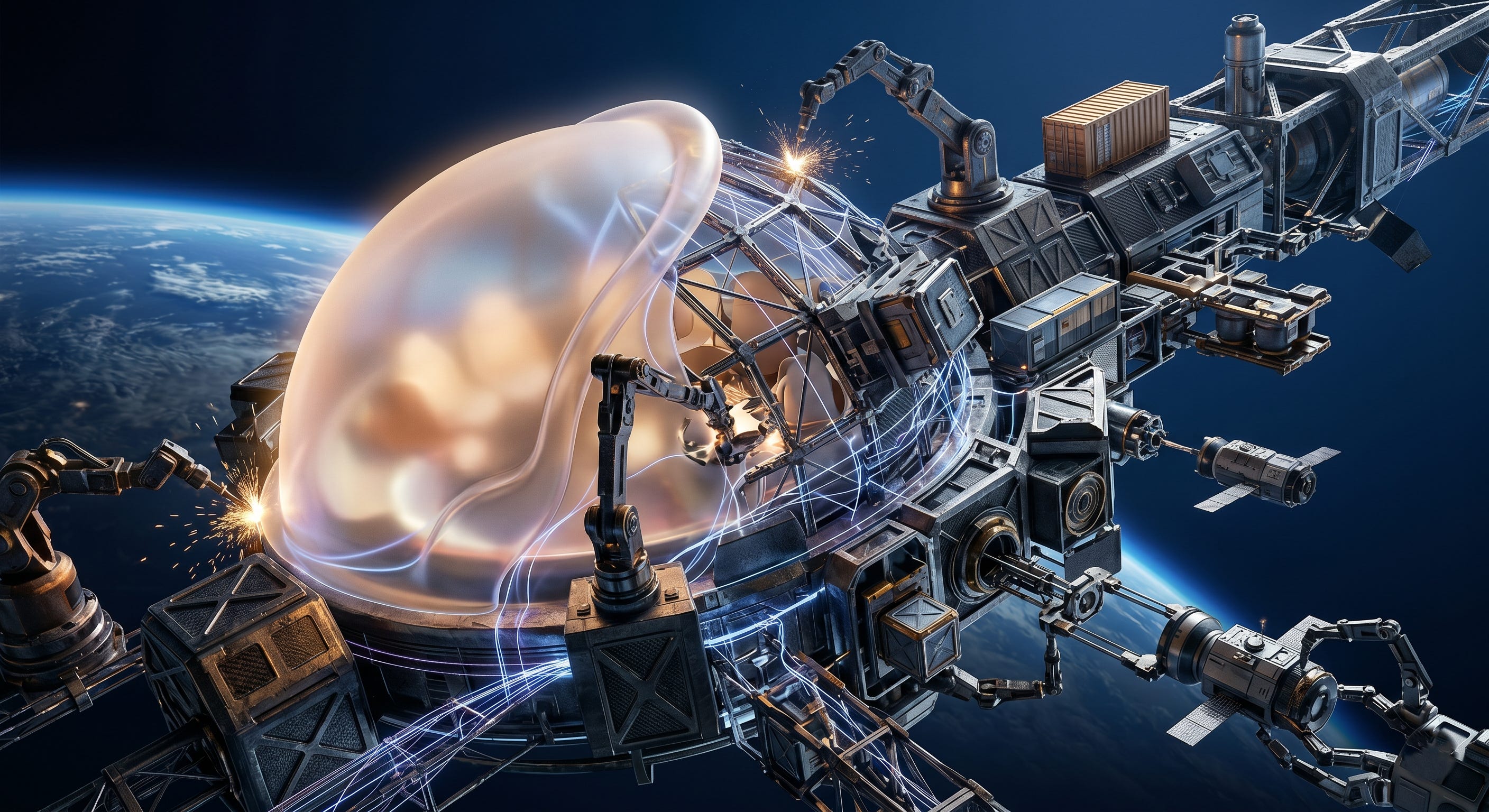
The initial wave of commercial space ventures heavily promoted passenger travel to capture public attention and secure early capital.
Space tourism offered a straightforward narrative that retail and institutional investors could easily grasp because it mirrored familiar terrestrial hospitality models. Early business plans promised regular suborbital flights and luxury orbital habitats, creating massive media interest and high valuations for consumer-facing projects. However, the immense public enthusiasm surrounding these plans masked the extreme liability and staggering costs inherent in human spaceflight. Once the strict engineering realities set in, early startups quickly realised that catering to wealthy passengers was economically unviable for an emerging company.
The core problem stemmed from the demanding requirements of human-rated systems. Complex life support mechanisms and rigorous safety compliance consumed almost all available payload mass and development budgets.
As capital markets tightened and launch schedules slipped, the most viable orbital businesses recognised that their long-term survival depended on a complete strategic realignment. They shifted their focus away from the consumer towards the broader in-space economy. Founders began prioritising the structural backbone required to support other commercial entities rather than serving individual tourists.
This new backbone takes the form of foundational systems like satellite servicing, orbital logistics, autonomous refuelling depots, and robotic material processing. By abandoning the high-risk consumer market in favour of practical business-to-business services, founders found a much more reliable path to revenue generation. The pivot from sightseeing to foundational infrastructure represents a natural maturation process for the commercial space sector, where consumer-facing projects often yield to industrial utility once the true costs of operation become apparent.
This transition provides a vital lesson for entrepreneurs operating in any capital-intensive industry, demonstrating how adapting a grand vision to align with structural market demands creates a highly sustainable enterprise.
The story of the orbital economy shows that the real money is rarely made by those selling the tickets. It is made by the enterprises building the roads, managing the fuel, and assembling the heavy machinery.
🚀
